The four-zone packing system for car camping out of any vehicle
Packing lists tell you what to bring. They never tell you where it goes — which is the part that actually costs you time.
Lists fail because they have no addresses
Every car camping checklist online is a list of nouns. Headtorch, stove, water, straps. You bring all of it, and then it lives wherever it landed when you loaded the car at 9pm on a Friday.
A system gives each noun an address. Zone, then slot. Once an item has an address, packing becomes checking, and unpacking to find things stops entirely.
Zone 01 — Tailgate: anything used while cooking or standing outside
Utensils, lighter, wipes, dish soap, headtorch, bottle. Reached at chest height off the open tailgate or hatch. This zone is used ten times a day and is the reason people think they are disorganised — it is the zone that has no natural home in any vehicle.
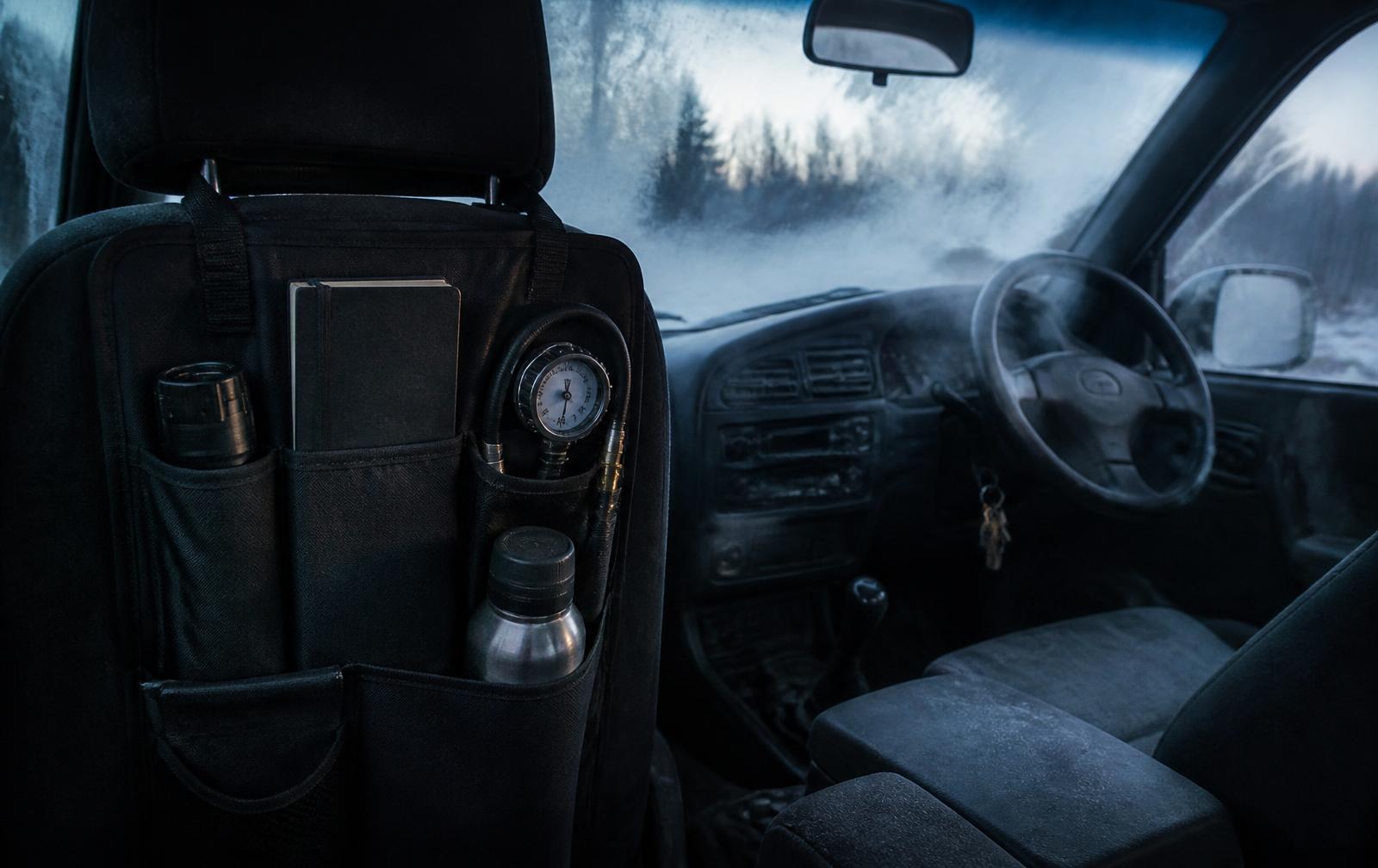
Zone 02 — Cabin: anything used while driving
Torch, notebook, tyre gauge, snacks, bottle, sunglasses, dog leash. If you need it with a seatbelt on, it belongs on a headrest, not in a door pocket where it slides out of reach at the first roundabout.
This is the zone that matters on a long day of dirt road driving. Everything in it should be reachable without unbuckling.
Zone 03 — Cargo: bulk, weight and things used twice a day
Water, fuel, kitchen bin, sleeping gear, recovery kit. Divided into compartments, anchored to the floor, loaded heaviest against the seat backs. This zone should be boring — you open it in the morning and at camp, and that is it.
Zone 04 — Console: small, dense, never-used-until-urgent
Cables, fuses, multi-tool, spare key, first-aid basics. One flat pouch that lives under the armrest lid and can be pulled out whole. Loose items in a console are the fastest way to lose a spare key.
Build the system in the order it hurts
Do not buy four zones at once. Fix the zone that is costing you time. For most people that is the tailgate, because standing outside with wet hands looking for a lighter is the most frequent version of the problem.
Once Zone 01 stops being a decision, add the cabin, then the cargo floor, then the console. Each one is a smaller improvement than the last, which is the correct order to spend money in.
The Sunday-night test
You have a system when repacking after a trip takes one pass with no piles on the driveway, and when you can load for the next trip in the dark. If you can do both, stop buying gear.
Questions we get asked
- Does this work in a van, or only trucks and SUVs?
- It works in anything with a rear opening, seats and a console. In a Transit or Promaster the tailgate zone hangs on a rear door panel instead of a tailgate lip, and the cargo zone sits on the plywood floor.
- Which zone should I buy first?
- The one you swear at most. For people who cook outside that is almost always the tailgate; for long dirt-road driving days it is the cabin.
- Can I mix these with the gear I already own?
- Yes. The zones are a method, not a product requirement. If your existing bins already give every item one fixed address, the system is already working.
Keep reading
Field note 01
How to set up a tailgate kitchen that works in under a minute
The tailgate is the best work surface on the vehicle and the one most people bury. Here is the layout that keeps it clear.
Field note 02
How to organise an SUV cargo area so nothing slides on the trail
An empty cargo floor is the worst storage system ever invented. It has no walls, so the road builds your layout for you.