How to organise an SUV cargo area so nothing slides on the trail
An empty cargo floor is the worst storage system ever invented. It has no walls, so the road builds your layout for you.
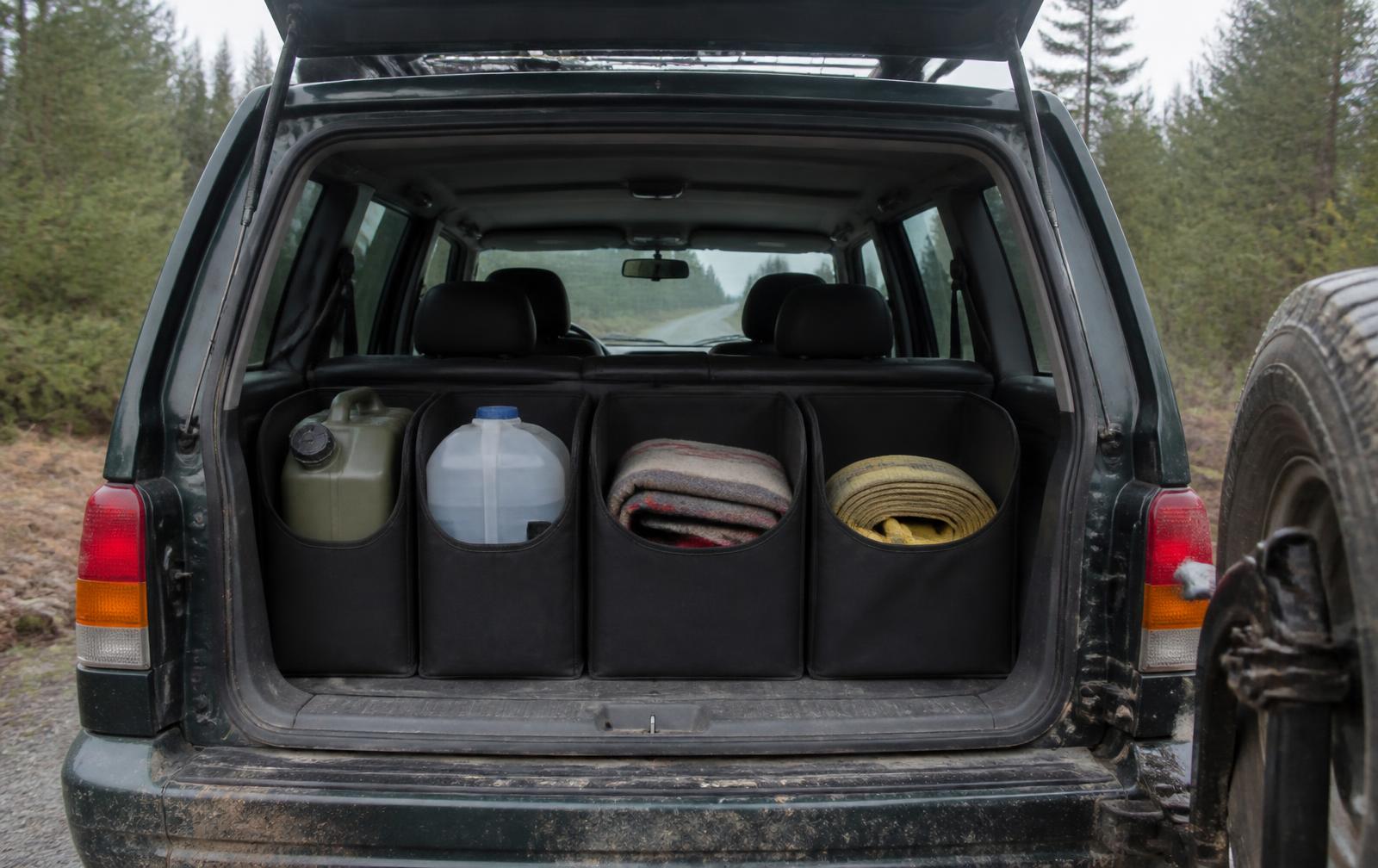
Why loose loads reshuffle
Nothing in a cargo area is held by anything except friction and whatever it is leaning on. Take one item out and the rest fall into the gap. Drive twenty minutes of washboard and the load has redistributed itself into the shape of the road, not the shape you packed.
The fix is not more bags. It is walls. Compartments that hold their shape when loaded turn friction into structure, and structure survives corners.
Load the four cargo slots in this order
Work from the back of the seats forward, heaviest and least-used first. This keeps weight low and central and puts the things you need at a fuel stop nearest the hatch.
- Slot 1, against the seat backs — water and fuel. Heaviest, lowest, never rolls out when you open the hatch.
- Slot 2 — kitchen: stove, pot, dry food. One compartment means one trip to the tailgate.
- Slot 3 — soft goods: sleeping bags, blankets, spare layers. Compressible, so it absorbs whatever the neighbours do.
- Slot 4, nearest the hatch — recovery and tools. Straps, gloves, air compressor. The stuff you need in the rain without unloading anything else.
The 40-pound line
Anything over about forty pounds should sit on the floor, forward of the rear axle where you can manage it. That is water, fuel and tools for most people. Once it is above knee height you are lifting it out at every camp, and heavy things stored high change how the vehicle behaves on off-camber ground.
Anchor the compartments, not the contents
Strapping down individual boxes means undoing straps every time you want a spoon. Anchor the walls to the cargo floor instead, then let contents lift out freely. Hook-and-loop floor anchors hold a loaded compartment against normal cornering and still pull up by hand when you want the floor back for a bike or a dog.
This is also why compartments beat tubs: a tub has to be lifted out and set on the ground. A compartment stays in and gets reached into.
Leave the dog and the second row in the plan
If a dog rides back there, keep the compartment wall height below where the dog lies, so they are not standing on gear, and keep the recovery slot away from a wet coat. If your second row folds, check the compartment depth clears the folded seat back — otherwise you lose the fold and the flat sleeping platform with it.
What good looks like after a week
Open the hatch on day seven and everything is still in its slot. You can name what is in each compartment without looking, you have not put anything on the ground, and packing up takes one pass instead of three.
Questions we get asked
- Do cargo organisers work in a wagon like an Outback?
- Yes, provided the compartment is under the cargo cover line. Our Cargo Pack is sized for cargo areas 28 inches wide and up, which covers Outback, Crosstrek, 4Runner and van floors.
- Rigid boxes or soft compartments?
- Soft-sided with rigid panels. Fully rigid boxes waste the wheel-well shape and rattle; fully soft bags collapse when you take one item out. Cordura over HDPE panels holds shape and still absorbs vibration.
- How do I stop things rattling?
- Fill the gaps with soft goods rather than adding more straps. Any compartment that is two-thirds full will rattle; put a blanket or spare layer in the void and the noise stops.
Keep reading
Field note 01
How to set up a tailgate kitchen that works in under a minute
The tailgate is the best work surface on the vehicle and the one most people bury. Here is the layout that keeps it clear.
Field note 03
The four-zone packing system for car camping out of any vehicle
Packing lists tell you what to bring. They never tell you where it goes — which is the part that actually costs you time.